




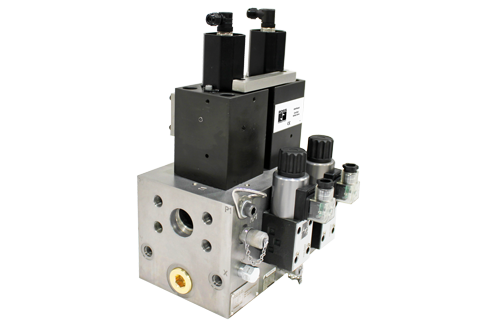
Risk Mitigation of Hydraulic System Pressure Intensification with Stopping and Holding Loads
There are complexities in hydraulic functional safety, even in the most common tasks such as stopping and holding loads using hydraulic cylinders. Although placing a valve on the rod end of a hydraulic cylinder to block flow may appear straightforward in schematic form, ensuring both safety and proper functionality requires careful consideration of several critical factors.
Pressure Intensification

Blocking valves are frequently used to isolate energy in hydraulic systems, but if applied incorrectly, they can cause pressure intensification—particularly within the confined oil volume on the rod side of a cylinder. This phenomenon occurs due to Pascal’s Law, which states that pressure applied to a confined fluid is transmitted equally in all directions. Hydraulic systems involve multiple energy conversions: electrical energy from a motor is transformed into hydraulic energy by a pump, which is then converted into mechanical energy by a cylinder. When the cylinder is blocked hydraulically, the mechanical energy is forced back into hydraulic form and becomes trapped on the rod side, potentially leading to dangerously high pressure levels.
How to Mitigate this Issue
To properly mitigate pressure intensification in hydraulic systems, it's important to begin by evaluating key components. First, determine whether the cylinder can handle elevated pressure levels by consulting the manufacturer to confirm both its structural integrity and the pressure ratings of its seals. Next, verify that hoses and fittings are rated for the increased pressure by checking with their respective manufacturers. If additional safety measures are necessary, consider incorporating safeguards into the hydraulic circuit using two primary strategies: energy removal (bleeding) and energy isolation (blocking). The most effective method is often blocking the rod end while bleeding the piston end, which halts extension and safely releases pressure, thereby minimizing the risk of pressure intensification.
Key Points
Here are some key points to understand about pressure intensification in hydraulic systems:
- Pressure intensification occurs exclusively on the rod side of the cylinder; it does not happen on the piston side in typical hydraulic configurations.
- When selecting a safety solution, always align it with the functional safety objective. Consider whether you need to stop extension, retraction, or both.
- Evaluate which forms of energy must be isolated or released, and how one safety measure might impact other system requirements.
- Always perform the pressure intensification calculations. Never skip the math.
Designing a safe and reliable hydraulic system requires a deep understanding of how safety protocols affect system behavior. This includes incorporating redundancy and monitoring to meet safety standards and analyzing the impact of safety components both upstream and downstream. Proper evaluation ensures the system remains secure and performs as intended under all conditions.