



Pneumatic Internal versus External Monitoring
Monitoring methods used in pneumatic safety valves have evolved over time to address the inherent dangers of mechanical power presses, particularly the use of dual valves without monitoring, which posed significant risks due to undetected faults. External monitoring was introduced using electromechanical limit switches and later evolved to include pressure-operated and electronic proximity switches. However, these systems were susceptible to being bypassed, compromising safety.

Internal Monitoring
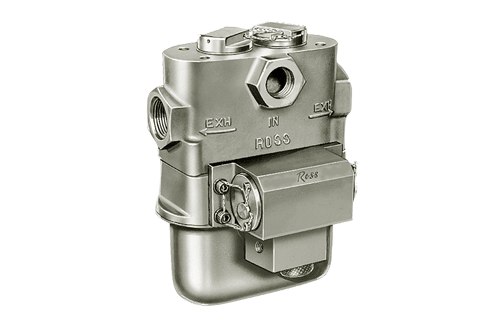
To address this issue, internal monitoring was developed. This method uses air pressure from both sides of a valve to operate a monitoring spool, ensuring synchronous valve operation. If the valve internals are out of sync, the spool trips and locks the valve, requiring a manual reset. Internal monitoring integrates several safety features, such as fault detection, pressure blocking, reset inhibition, anti-tie down, and prevention of operation when air is re-applied while solenoids are powered.
External Monitoring
Modern external monitoring has also advanced, incorporating embedded sensors and electronics within the valve. These systems work with sophisticated safety controllers that are now more powerful, compact, and cost-effective. With features like password protection and change logging, bypassing safety circuits has become more difficult. Properly designed and validated external monitoring systems can be highly reliable, and ROSS provides integration guides to support their implementation.
Conclusion
Both internal and external monitoring methods can be effective if the safety system is thoroughly validated and maintained. The choice between the two depends on factors such as the type of safety controller, concerns about bypassing, and the valve’s size and flow requirements. When implemented correctly, either method contributes significantly to a complete and reliable machine safety system. A well-implemented monitoring system is essential for a complete machine safety solution.